
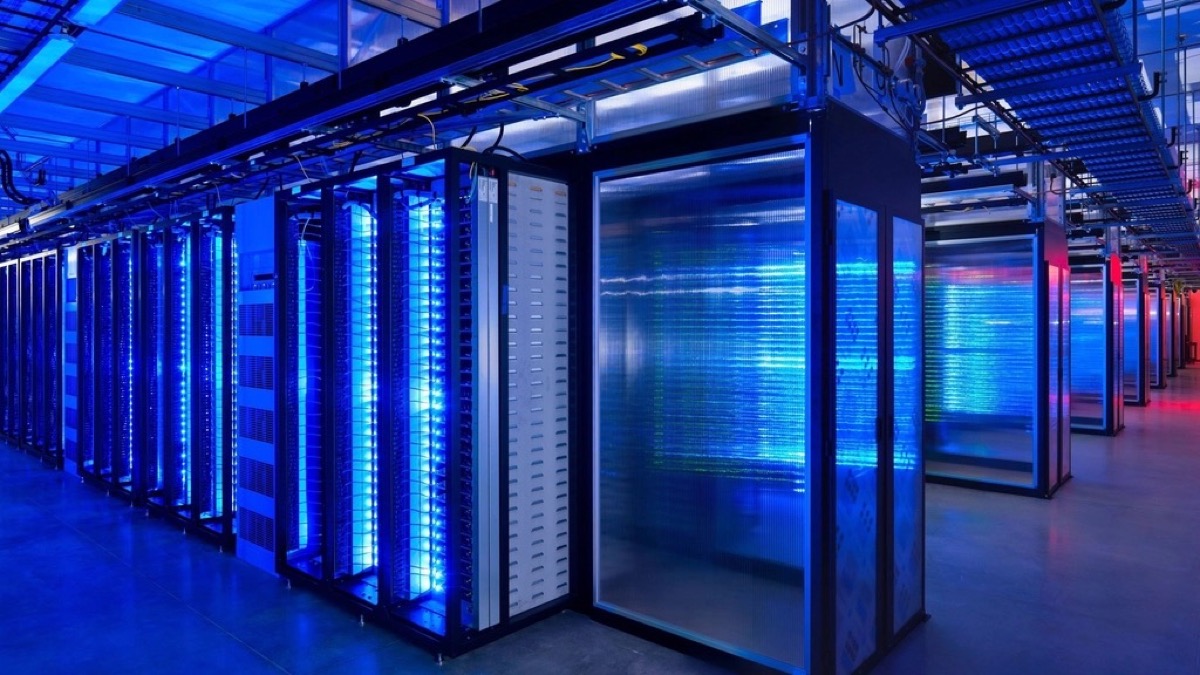
Photo: CC0 public domain.
On August 27 there were $173.6 million of USDai tokens outstanding. Today there are $283.3 million. Two calendar days account for $103.5 million of that increase, and the rest of the fortnight accounts for $6.2 million.
USD.AI is a lending protocol that finances GPU purchases. Operators of AI data centers borrow dollars to buy Nvidia hardware, the hardware secures the loan, and depositors on the other side collect the interest. The dollar leg is a token called USDai. Its supply history is public down to the day, which makes it possible to see exactly when the money showed up.
The two days that did the work
USDai closed August 27 at $173,598,079. It closed August 28 at $225,414,833, a one-day increase of $51,816,754. The next six days added $4.7 million between them. Then September 3 closed at $230,072,377 and September 4 closed at $281,791,688, a second jump of $51,719,311. The two steps are within $100,000 of each other in size.
USDai supply, August 25 – September 7, 2026
Daily circulating supply across Arbitrum, Plasma and Ethereum. Source: DefiLlama chain balances, cross-checked against the token contract on Arbitrum.
On Friday, August 28, the exchange Bullish announced a $100 million stablecoin debt facility for USD.AI, earmarked for loans against GPU hardware. Thomas Cowan, who runs tokenization at Bullish, framed it as a conviction bet that well-structured real-world assets belong on-chain. Two draws of about $51.8 million each, one landing on the announcement day and one a week later, against a $100 million commitment. USD.AI has not published a tranche schedule, so the link is inference rather than confirmation. The sizes and the dates leave little room for a second reading.
Headline growth: +63.2% in 11 days. Share of it that arrived on two days: 94%. Number of depositors that probably represents: one.
This is worth separating from the story a supply chart usually tells. A stablecoin adding two-thirds to its float in under a fortnight normally means demand. Here it means one institution wrote a cheque in two pieces. That is a real vote of confidence from a real balance sheet, and it is a different fact from retail money arriving.
What the money is lent against
USD.AI originates non-recourse loans. If a borrower stops paying, the lender's claim runs to the hardware and its contracted cashflows, not to the operator's other assets. Loans are written at 70–80% loan-to-value with a mid-teens APR, interest and principal due every 30 days on a three-year amortization schedule. Wilmington Trust holds the loan proceeds in escrow per deal, releasing them only after the servers are installed and tested at the data center and a lien has been filed.
The collateral is specific. USD.AI has previously financed a $98.1 million loan against 2,304 Nvidia B300 units and a $34 million facility against 768 B200s. On default, the protocol works with IT asset disposition firms who can physically collect and resell the machines, and a value reinsurance policy from a provider called Barkr pays the shortfall if the resale comes in under the insured amount.
That reinsurance line is the piece I would read hardest. It is the entire answer to the obvious question about lending against hardware that loses value every quarter, and it converts a depreciation problem into a counterparty one. Whether that is an improvement depends on how strong the insurer is, which is not something a depositor can check from a dashboard.
Two tokens, and only one of them carries the risk
USDai itself holds none of this. The protocol's documentation is explicit that the token is collateralized by PYUSD, which sits on Treasuries and cash equivalents, and that it is strictly isolated from GPU depreciation and AI infrastructure credit. Mint it with stablecoins, redeem it 1:1.
The loan exposure lives in sUSDai, the staked version. Yield shows up in the exchange rate rather than in a rebasing balance. Reading the contract on Arbitrum today, one sUSDai converts to 1.1108 USDai. USD.AI's own site advertises a current APR of 8.28% and an expected 11.81%, across $548 million of total deposits and 76,635 users.
Getting out takes a month, by design
Deposits are instant. Exits are not. sUSDai redemptions run on a global 30-day epoch: requests can be queued on days 1 through 29, the queue closes on day 29, and on day 30 the protocol pays out of whatever free USDai it has, first-in-first-out. If the cash on hand does not cover the queue, requests are filled in order until it runs dry and the remainder carries into the next 30-day cycle. Position in the queue is the only thing that decides who gets paid.
The documentation states the constraint plainly: the protocol does not liquidate loans early to satisfy withdrawals. It also says, in its own words, that sUSDai is not a stablecoin and is not instantly redeemable at par value. A planned auction mechanism would let depositors bid for queue priority, but it is described as not yet implemented.
So the practical wait depends on the calendar. Unstake a day before an epoch closes and you wait a day. Unstake the day after one closes and you wait a month, assuming the queue clears.
Before you stake into anything with an epoch
Four things to check
- Know which token you are holding. USDai and sUSDai have almost the same name and completely different risk. One is a Treasury-backed dollar. The other is a claim on three-year GPU loans.
- Find out where you are in the cycle. A 30-day epoch means your exit date is set by the protocol's calendar, not by when you decide to leave.
- Ask whether the last queue cleared in full. A queue that carried into a second epoch is the signal that matters, and it will show up long before any price does.
- Read the two share prices. sUSDai quotes a deposit price and a redemption price. You buy at one and exit at the other.
Where this token actually lives
One more detail from the supply data. USDai is listed on three chains. Arbitrum holds $282.66 million of it, Plasma holds $658,000, and Ethereum holds $5,660. The multi-chain footprint is real in the sense that the contracts are deployed, and it rounds to a single-chain token in every sense that affects a holder. If Arbitrum has a bad week, so does this stablecoin.
What to watch next
- Whether growth continues after the facility. If the remaining draws are done, supply should go back to adding a million a day. A third $50 million step would say the credit line was larger than announced.
- The first epoch that does not clear. Loans amortize monthly, so cash arrives on a schedule the protocol can forecast. A carry-over queue means redemption demand outran that forecast.
- Loan-level disclosure. Two of the deals have public hardware counts and dollar amounts. A $548 million book deserves that for every loan, not the large ones.
The number worth writing down here is not the 8.28% APR. It is the 30, because that is what decides when you can have your money back, and it is the one figure the marketing does not put in large type. A yield that comes from three-year equipment loans is going to be paid on the equipment's schedule. That is not a flaw in the design. It is the design, and it deserves to be as obvious to a depositor as the rate is.