
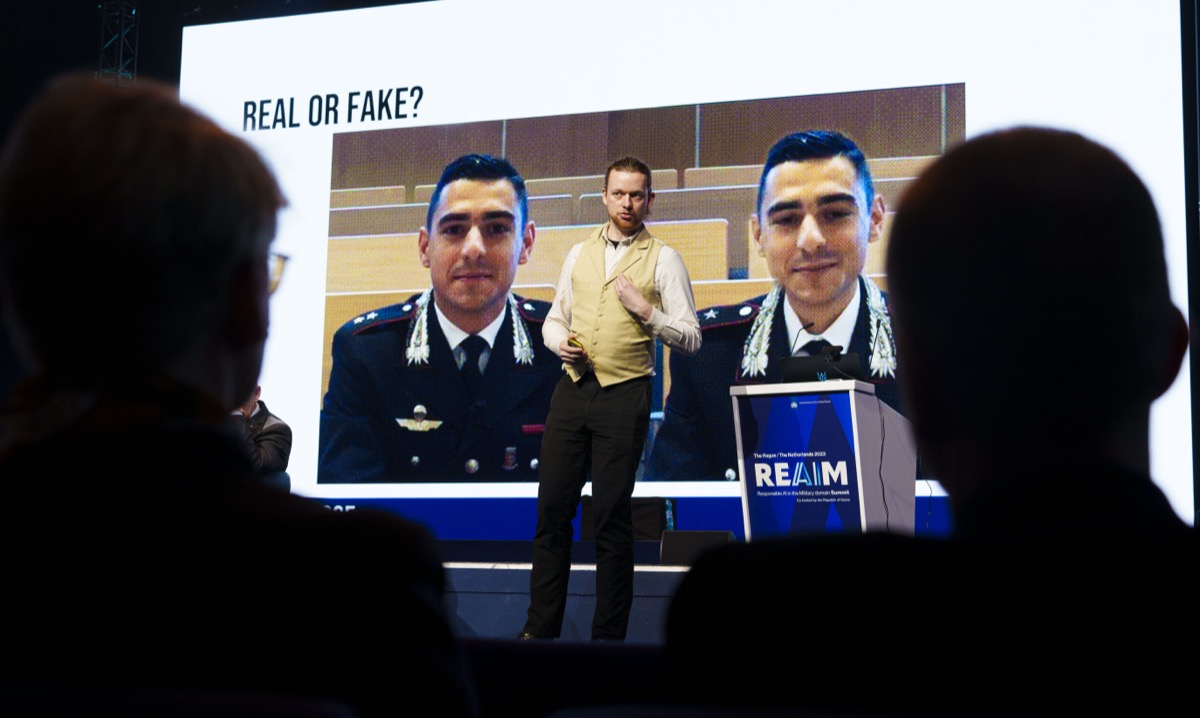
Image: Ministerie van Buitenlandse Zaken via Wikimedia Commons, CC BY-SA 2.0
A scam video no longer looks like a scam video. The lighting is right, the lips sync, and the person on screen is someone you have watched for years — a billionaire founder, a famous fund manager, maybe your own bank's relationship manager. In a widely cited study by identity firm iProov, only 0.1% of participants could reliably tell real footage from AI-generated fakes. Scammers know this, and in 2026 they are running it at industrial scale.
The Numbers Are No Longer Small
The FBI's Internet Crime Complaint Center did something new in its latest annual report, released this June: for the first time in the report's history, AI-enabled fraud got its own section. The bureau counted 22,364 complaints tagged with an AI descriptor for 2025, adding up to roughly $893 million in reported losses. The single biggest slice? Investment fraud, at $632 million — about 71 cents of every AI-fraud dollar lost.
Two caveats make those figures scarier, not less scary. First, they only count people who reported the crime and mentioned AI — the FBI itself treats the number as a floor. Second, the FTC separately tracked $2.1 billion in social media scam losses for 2025, with investment scams making up more than half of it, and a growing share of those pitches now arrives wrapped in a cloned face or voice. "AI-created fraudulent communications can look very official and very legitimate to even the most trained individuals," Michael Machtinger, deputy assistant director of the FBI's Cyber Division, said alongside the report.
The Three Scams Doing the Damage
1. The celebrity giveaway stream
You have probably scrolled past one. A hijacked or fresh-made YouTube or X account runs a "live" broadcast of a famous tech founder announcing a limited crypto giveaway: send coins to the address on screen, get double back. Elon Musk remains the most impersonated public figure in this genre, and the same face has been stitched onto ads for a fake trading platform marketed as "Quantum AI" that promises automated returns no real fund would print. Nobody has ever received the doubled coins. Nobody ever will.
An 82-year-old retiree drained his retirement savings and put $690,000 into a crypto scheme fronted by a deepfake video of Musk, according to reporting by CBS News. The pitch arrived through an ad that looked like a normal financial news segment.
2. The boardroom video call
The template case here is the British engineering firm Arup. In early 2024, a finance employee in its Hong Kong office joined a video conference with the company's CFO and several colleagues to approve a confidential acquisition payment. Every other person on that call was an AI reconstruction. The employee approved 15 transfers totaling about $25 million before a routine follow-up with head office exposed the fraud. The money has never been recovered. The same playbook has since been aimed at retail investors: a "senior broker" or "exchange compliance officer" appears on a video call to walk you through moving funds to a "secure" wallet.
3. The cloned voice on the phone
Three seconds of audio — one Instagram story, one voicemail greeting — is enough to clone a voice convincingly. The classic version is the family emergency call: a son or granddaughter in tears, an accident, bail money, wire it now, please don't tell anyone. The investor version is subtler: a call that sounds exactly like the advisor or broker rep you spoke to last month, confirming a "account migration" that ends with your funds on a platform the scammer controls. Identity firm Entrust reports that deepfakes now drive one in five biometric fraud attempts globally, which tells you how routine cloning has become.
Could You Spot It? Test Yourself
Five scenarios below, all modeled on real 2025–2026 fraud patterns. Call each one: scam or legit. You get instant feedback, and a verdict at the end.
🔍 Scam or Legit?
Tap your answer on each card. No do-overs — just like real life.
[01]A verified-looking YouTube stream shows a tech billionaire "live," announcing that anyone who sends BTC to the on-screen address gets double back within minutes. The stream has 40,000 viewers.
[02]You get a video call from your brokerage's "compliance team." The rep's face matches the company site. He says your account is flagged and you must move funds to a temporary secure wallet within the hour.
[03]An ad shows a famous investor endorsing an AI trading app with "guaranteed 30% monthly returns" and a countdown timer for the last remaining spots.
[04]Your bank calls about a suspicious charge. Before discussing anything, the caller says: "Please hang up and call the number printed on your card, then ask for the fraud department."
[05]A late-night call from an unknown number: your nephew's voice, panicked, says he's been in an accident abroad and needs $2,000 wired now. He begs you not to call his parents.
The Tells That Still Work
Detection advice from 2023 — look for weird blinking, six fingers — is mostly obsolete. The current generation of fakes beats casual inspection. But experts at firms like Kaspersky and the Better Business Bureau point to tells that still hold up in mid-2026:
- The profile turn. Most face-swap models are trained on front-facing footage. Ask a video caller to turn to a full side profile or pass a hand across their face — edges smear, glasses melt, jawlines detach.
- Texture and teeth. Skin that looks waxed and poreless in HD, hair that moves as one solid mass, teeth rendered as a single white strip — all common rendering shortcuts.
- Breath and rhythm. Cloned voices place breaths at odd moments or loop the same breath sound. Long pauses before answers can flag a scammer typing prompts.
- The ask itself. Urgency, secrecy, and irreversible payment rails — crypto, wire, gift cards — form the signature of nearly every deepfake scam, whatever the face on screen.
Your Anti-Deepfake Playbook
- Verify on a second channel, every time. Any request to move money that arrives by video, voice, or DM gets confirmed through a number or address you already had. Hang up, call back. This one habit would have stopped the Arup loss.
- Set a family code word. Agree on a phrase no scammer could scrape from social media. An emergency caller who can't produce it gets a callback on the person's known number.
- Treat celebrity endorsements as ads for theft. No billionaire doubles strangers' crypto. No real platform guarantees monthly returns. Check any "opportunity" against the SEC's or your regulator's public alerts before funding an account.
- Slow the transaction down. Deepfake scams price in your panic. A 24-hour personal rule on any new transfer destination defeats the countdown timer, the crying voice, and the "flagged account" alike.
- Report it — near-misses count too. File at ic3.gov or reportfraud.ftc.gov. Those "floor" statistics only rise to reality — and drive platform takedowns — when near-misses get logged too.
What To Do Before the Next Convincing Video Finds You
Here is the uncomfortable truth the numbers point to: your eyes and ears are no longer reliable witnesses, and they will get less reliable every quarter. The investors who stay safe in 2026 are not the ones who can spot a blurry jawline — they are the ones who moved verification out of the video frame entirely. So do the five-minute version tonight: agree on a code word with your family, save your bank's and broker's real numbers as contacts, and adopt the 24-hour rule for any new payment destination. The next deepfake that targets you will be the best one you have ever seen. Your process, not your eyesight, is what sends it to voicemail.